 UAE Digital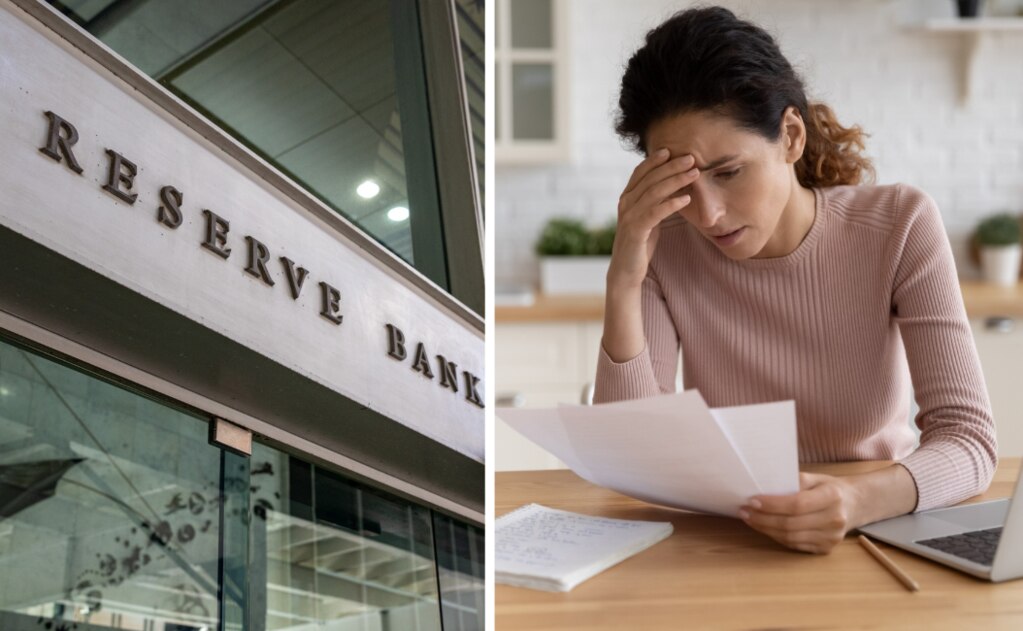
The average Victorian borrower is facing a $17,000 hit from RBA to their borrowing power this week. Victoria’s average homebuyer will be priced out of some of Melbourne and regional Victoria’s few remaining affordable areas by a Reserve Bank hike on Tuesday. And there could be knock on effects to the state’s coffers as the price of sales, and sales volumes, both take a hit this spring.
The RBA is widely expected to announce a 0.25 percentage point increase to the nation’s cash rate, which underpins mortgage costs, on Tuesday. RELATED: Rates nightmare: Experts tip double RBA hike before Christmas One RBA decision can affect home ownership for more than a decade, research finds Top 6 banks panic: Aus’ biggest lenders hike rates before RBA can New analysis of the impacts on the borrowing power of those taking out the state’s $664,000 average loan has found, with a 20 per cent deposit, they would go from being able to afford houses worth up to $797,000, to those worth less than $780,000. That would cost them access to a median-priced house in 16 suburbs and towns, including Heidelberg West, Sunshine West, Cranbourne North, Rosebud and South Morang.
But with concerns the nation may be facing a second rate hike by the end of the year, the number of impacted suburbs could virtually double to 31 as their purchase price cap drops to $763,000, cutting off the typical home in Altona Meadows, Lalor, Braybrook and Kinglake. What Rate Hikes Will Do To Your Home Dream Household income Borrowing capacity today Purchase price cap today Purchase price cap after 0.25ppt hike Purchase price cap after 0.5ppt hike $75,000 $337,500 $405,000 $396,170 $387,748 $100,000 $450,000 $540,000 $528,226 $516,997 $150,000 $675,000 $810,000 $792,499 $775,652 $200,000 $900,000 $1,080,000 $1,056,612 $1,034,150 $250,000 $1,125,000 $1,350,000 $1,320,725 $1,292,649 $300,000 $1,350,000 $1,620,000 $1,584,838 $1,551,148 $108,105 (Vic median) $486,473 $583,767 $571,135 $558,994 $147,556 (wage needed for average loan) $664,000 $796,800 $779,599 $763,026 Source: MoneySmart.gov.au, ABS For unit buyers with the capacity for the state’s average home loan, a single rate hike is enough to knock them out of apartments in Alphington, as well as townhouses and units in Diamond Creek and Mornington. However, for affordable suburbs priced below the new thresholds it’s likely there will be a concentration of demand that could help them shrug off the worst of a property market correction.
The analysis assumes you already have a 20 per cent deposit and an industry threshold borrowing capacity of about 4.5 times your household income, however this requires you have minimal liabilities from things like dependent family, existing loans, credit card debt, high household costs and similar. 222 Oriel Rd, Heidelberg West, is for sale at $790,000-$860,000 — potentially just within reach of the average borrower today, but possibly not after a rate hike. 6 Cobblestone Drive, South Morang, has a $750,000-$820,000 asking price that could leave it just out of reach for buyers maxing out with the state’s average loan. For a family on a more modest budget, with annual household income at $100,000, a single extra rate hike would cut their access from homes worth up to $540,000 to those worth about $528,000 and sideline even regional areas like Shepparton and Swan Hill. Higher income earners are also facing compromise, with households earning $300,000 a year likely to see their access to suburbs like Donvale and Clifton Hill impacted by even one more rate hike — unless they have a deposit of more than 20 per cent.
REA Group economist Luc Redman said borrowing up to 4.5 times income was typically considered high and would come close to maximum capacity for most. For those heading to that level, any Reserve Bank hike before the end of the year could be more problematic than for most others — and was unlikely to be compensated for by falling home prices. REA Group economist Luc Redman has noted while home prices are likely to fall, rising rates will probably leave buyers with bigger drops in borrowing power.
“The instantaneous effect of interest rates is increased repayments for loan holders and reduced borrowing capacity for households,” Mr Redman said. “As that cools demand in the economy, the subsequent short-term effect is on slowing home prices as competition reduces. “But it is likely that the reduction in borrowing capacity from interest rates will be larger than the downward pressure on home prices, because of ongoing supply shortages.” Real Estate Institute of Australia president Jacob Caine said their analysis of housing affordability had found 59 per cent of the median family’s income was being spent paying the mortgage, working out to in excess of $6000 a month — up 12.5 per cent from a year prior.
“The prospect of another interest rate rise will only further negatively impact those figures, and drive up the average monthly repayment,” Mr Caine said. “Not only will prospective buyers be dedicating more of their income to service the mortgage, but they will have less choice of where and how to live as a result.” Real Estate Institute of Australia president Jacob Caine has raised concerns for stamp duty impacts on state budgets after a rate hike or two this year. He added that impacts on borrowing power would hurt those struggling to get into or stay in the market, for those with more equity behind them there could be better opportunities to purchase — and homeowners wanting to sell more affordable properties could also benefit from increased demand as buyers were concentrated on lower price brackets.
“What that means for state and territory governments is a massive reduction in tax revenue, predominantly through stamp duty,” Mr Caine said. “For the average homeowner or renter, across all states, that means fewer services and lower quality outputs from their government, and functionally a reduction in the quality of their life as well.” Loan Market broker Jacob Decru said he was already seeing would-be homebuyers divided. There are those with better deposit margins and budgets behind them who are looking at today as an excellent time to buy — though possibly questioning how many more rate hikes they can afford their future mortgage with. 8 Woodstock Drive, Cranbourne North, could be yours for $795,000-$869,000 — but would challenge the state’s average home loan recipient without an oversized deposit.
Once affordable, Burnside Heights could be a tricky prospect for many buyers after a rate hike, despite having homes like 10 Florida Court for sale at $780,000-$820,000. Others are already stretching the limits of affordability, and he is seeing them being forced to more affordable options or pulling back from the market. “We have had some buyers coming in because of the correction, but we do have others who are getting pushed away because they are closer to their affordability limit,” Mr Decru said.
“And the fact that there could be two rate rises, the ones who are closer to their affordability limit, they are less likely to do something.” Real Estate Buyers Agents Association of Australia president Zoran Solano said he was expecting home buyers would find themselves looking lower down the ladder after a rate hike — but warned there was also a risk some might just look to rent instead. “While interest rates are going up, people will prioritise securing and holding a home over a lot of other things,” Mr Solano said. “But they might need to buy in a more affordable suburb, and that might lead to a stimulation of that more affordable property.
“We might see a compression of buyers to the bottom end of the market.” In Albion, this three-bedroom house is for sale at $750,000-$800,000, with a question mark over what buyers will be able to afford it after a rate hike. Sunshine West is one of the still relatively affordable pockets of Melbourne, with 4 Links St currently asking $770,000-$830,000 — a challenging prospect for many buyers. For investors, he said one and certainly two rate hikes would potentially even see them hold off from a purchase — potentially until the next federal election in 2028, in the hopes a new government might bring more favourable conditions for investors after Anthony Albanese this year made sweeping changes to negative gearing and capital gains tax discounts.
Victorian Suburbs At Risk From Rate Hike Heidelberg West — 0.25ppt hike — $795,000 median price Daylesford — 0.25ppt hike — $795,000 median price Silverleaves — 0.25ppt hike — $795,0000 median price Jeeralang Junction — 0.25ppt hike — $794,000 median price Rosebud — 0.25ppt hike — $793,750 median price Albion — 0.25ppt hike — $791,000 median price Burnside Heights — 0.25ppt hike — $790,000 median price Launching Place — 0.25ppt hike — $790,000 median price Strathfieldsaye — 0.25ppt hike — $790,000 median price South Morang — 0.25ppt hike — $790,000 median price Yarra Junction — 0.25ppt hike — $790,000 median price Nicholson — 0.25ppt hike — $790,000 median price Lovely Banks — 0.25ppt hike — $787,000 median price Mansfield — 0.25ppt hike — $786,000 median price Cranbourne North — 0.25ppt hike — $785,000 median price Sunshine West — 0.25ppt hike — $779,750 median price Suburbs reflect areas where average Victorian borrower with a 20 per cent deposit would no longer be able to afford after a 0.25 percentage point rate hike Source: MoneySmart.gov.au, ABS, REA Group Sign up to the Herald Sun Weekly Real Estate Update. Click here to get the latest Victorian property market news delivered direct to your inbox. MORE: ‘ Serious concern’: Why approvals aren’t translating into real homes Rising seas to smash Aussie homes in $855bn economic disaster $6m slashed: Australia’s biggest property price cuts revealed
Source: realestate.com.au