 UAE Digital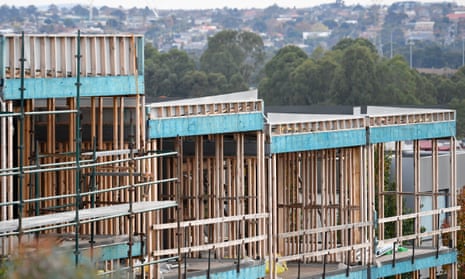
Donna Jones’s new “lovely little one-bedroom unit” was supposed to be part of her retirement plan. The 63-year-old disability support worker’s new apartment, which she bought off-the-plan from the Bathla Group, looked great. It would be smaller and easier to manage, much closer to her grandchildren than her old place, and, she believed, ready in just a couple of months.
After almost a year of delays, Jones was shocked to learn in the media that Bathla, one of New South Wales’s largest property developers, was not only broke, but on the verge of being liquidated . “I’m terrified that I’m going to lose my deposit,” Jones says. “I’ve worked all my life.
I was a single mother. This was my retirement.” Jones isn’t alone; thousands of homebuyers were left in the lurch by the sudden announcement on 25 August that Bathla had gone into voluntary administration, weighed down by almost $3.6bn in debt. Bathla’s customers aren’t alone, either.
While the developer’s size has turned its collapse into a major news story, thousands of other building companies have gone bust in the past year – some of which had sold people apartments with defects. The Bathla crisis has shone a spotlight on broader problems in the construction sector and raised questions about how the state and federal governments’ ambitious housing targets can be achieved. The national housing accord – an agreement between Australian governments, investors and the building industry to build 1.2m new homes across the country – is forecast to miss its original deadline of the end of 2029 by at least another year.
Since the accord came into effect in 2024, more than 7,000 construction companies have gone bust, according to data filed with the corporate regulator. There were 3,472 insolvencies last financial year, down slightly from 3,596 in 2024-2025. “For me it goes beyond one developer and raises the bigger question of how the housing pipeline we are planning for is actually going to be financed and delivered,” says Prof Nicky Morrison, a planning expert at Western Sydney University.
“Planning targets are one thing, but we need to think about finance, infrastructure, construction and genuinely affordable housing alongside them.” Left in the lurch Bathla has expanded into regional NSW, South Australia and most recently to Victoria since its establishment in Sydney in NSW in 1997, with 20,000 apartments and 7,000 “dwellings” in the works, according to its website. The insolvency advisory Teneo, which was appointed as Bathla’s administrator, said it entered crisis talks with private lenders to try to save the embattled development company and its many projects. Teneo said its immediate priorities included finishing the estimated 2,000-2,500 homes on which construction had already begun, and was not in a position to refund anyone’s deposits.
That’s left customers like Jones, who paid a $54,500 deposit for her Kembla Grange apartment in September last year, in limbo. “Had I known it was going to take 12 months, I would have invested my money instead. I haven’t, and I’ve made no interest on it,” she says.
After the NSW government knocked back its request for a bailout, Teneo warned it would be forced to liquidate Bathla if it didn’t get enough cash to keep it afloat in the short term. There was no money to pay subcontractors or Bathla staff, some of whom had gone without their wages for eight weeks, the administrators said. On Thursday afternoon, the Teneo administrator Stephen Longley said the administrators had managed to scratch together enough cash to make partial payments to the staff whose wages were due.
At a creditors meeting on Friday, administrators said there was about $40m in wages and superannuation still owing to workers, as well as debts of $3.4bn to creditors. There would be no more money for staff wages ongoing. skip past newsletter promotion after newsletter promotion The administrator, Teneo, said it was in discussion with five lenders about funding to keep parts of the business open and construction work continuing, but it would not be able to do so unless that funding was secured by Monday, according to the ABC. A volatile industry The property lawyer Renee Roumanos says she’s often contacted by homebuyers in similar predicaments.
“It’s very common, unfortunately ... I probably hear this monthly,” she says. When it comes to Bathla, Roumanos says the company went too far with its “high volume, low profit” model, to the point where it ended up not being able to pay for its developments.
“Now, when you’re doing such high volumes and you’re not making money and you keep borrowing money, you’re on the back foot already,” she says. Speaking generally, Roumanos says the entire building industry is “already in a really volatile state” due to increased labour and materials costs. “We’ve seen higher numbers of companies going into liquidation and voluntary administration because they can’t keep up with the finances and the debt,” she says.
Residential construction is exhibiting a higher level of stress than non-residential, according to analysis by CreditorWatch. This is partly because there are more smaller businesses and sole traders operating in the residential space, who have tighter margins and are more vulnerable to economic pressures, the firm’s analysis shows. Additionally, the commercial construction centre has been buoyed by the huge demand for datacentres, which is supporting the sector’s overall performance but may drive up material and labour costs for residential builders.
Cameron Kusher, an independent property economist, says there has been a “massive” increase in the cost of constructing new housing. Additionally, Kusher says, higher interest rates have resulted in traditional lenders being wary of financing developers, leading them in many cases to seek riskier forms of credit on the private market. Jones says she’s heard “absolutely nothing” from Bathla or Teneo, and the only updates she’s managed to get come from reading the news or talking to people at the construction site if she drives down to visit it.
“I want them to tell me my unit will be fixed, it will be finished, and I can move in.”
Source: The Guardian